
Progressive Lenses
By Joy Nicholas
@joynicholaswrites
“Very close, close, and further away,” the optician narrates in his subtle German accent as I try on my new glasses, “all in one lens. No lines. What do you think?”
I pause before replying.
For all my life until my forties, I enjoyed having perfect vision. And then one day, it was hard to read the page in front of me. I squinted at price tags and started asking my kids to tell me what the numbers and words were.
“Poor old Mom,” they’d say in gently teasing voices, patting my hand.
“You’re that age,” my own mother told me when I complained to her.
What age? I wondered. How does your body know to suddenly blur what’s closest to you? Why?
The optician suggested progressive lenses. The term shimmered with possibility, as if perfect vision would be returned within these magical frames, maybe even the ability to see better than I ever had before.
I smile back at the optician. “They’re great.”
If it sounds like I’m convincing myself, he seems to catch on. “Wear them only around the house this week. They take some getting used to.”
My smile doesn’t move. “Thank you,” I say. Because I should be—no, I am—grateful, so very grateful that I can see again, that I can afford these glasses. I know this is a gift.
“What do we think?” I type into the family chat when I get back to my car, captioning the selfie I just took in my new glasses. They’re a classic shape with thin frames that are the color of storm clouds.
“LOOOOOVE!” one daughter types back.
“Super cute!” says the other.
“Hot nerd mama!!” my husband quips, making me laugh.
But every time I look at the picture, it feels more like a stranger. They’re just an accessory, I tell myself, like new earrings or a hat. Except that I wear them all the time. I have to, or I can hardly see.
In the movies I was raised on, the quirky nerd only wins the heart of the cute guy when she takes her glasses off and glides down the stairs, tossing her shiny hair over her shoulder. Now I grip the stair rail praying I don’t fall, as the steps waver in my triple vision lenses. I thank God I already have my own cute guy since roughly a million years ago. These glasses will be the first thing I reach for in the morning and the last thing I take off at the end of the day. And it’s only because I’m getting older.
A few days later, while playing a round of Guess Who? with my youngest daughter, I imagine myself as one of the faces.
“Does she wear glasses?”
“No. Oops! Actually, yes.”
Is this really me now?
The first week I constantly fight the urge to pull the glasses off. I can’t figure out where to look as I read, climb stairs, and watch my dog chase a squirrel across the yard. The second week I wear them more, but never outside the house. That doesn’t happen till the fourth week, and still I struggle. They smudge when I accidentally brush my fingers against the lenses, speckle when I walk through the rain, and fog up when I wear them exercising or come inside from the cold or pour pasta into a colander in the sink or tear up at a memory. So much for my miracle vision.
I try to believe I’ll be used to them someday. But as I lean toward the bathroom mirror while washing my hands, I notice that the magnification doesn’t only bring words into view, it highlights the crinkles around my eyes. I see, better than ever, the groove between my eyebrows that deepens in bright sunlight or whenever I burn with anger.
My friend Lynn is thirty-seven years older than me. We met on the Ocean View Trail in Pacific Grove when I was in my late twenties. I used to walk my dog there early in the mornings, a block from the pink Victorian cottage where I lived. Every day we’d smile and exchange good mornings until one day, she asked, “Can I walk with you? You walk fast, and it’s hard to find someone who likes to walk fast.”
We clicked like long-lost best friends. Since our age gap meant nothing to our pace or shared interests, I was shocked when she told me about the day she looked in the mirror and realized she was old.
“You’re not old!” I interjected.
She ignored me and went on. “I remember thinking, I don’t feel the way I look! It isn’t fair!”
“But you’re gorgeous!” I insisted. My words were far more than a platitude. She’d lived a full and interesting life as an art dealer, mother, and amateur musician. Time had given her a lustrous patina, earned with both heartbreak and love. I’d never dream of saying her wrinkles or gray hair detracted from her beauty, and I told her as much.
“Thank you,” she said, flashing a radiant smile as she touched my shoulder. Then she shook her head and scrunched her nose. “It’s just a funny thing, you know, getting older.”
And this is what I think of now. I’ve always admired the wrinkles and softness of other women and boldly taunted laugh lines and forehead creases. ”Bring them on!” I’ve crowed. “They show I’m real, like the Velveteen Rabbit!!” I sobbed as I watched The Barbie Movie, when Barbie tells the older woman at the bus stop, “You’re … SO … beautiful,” and the woman replies, “I know it!”
Still, as I spy more gray at my roots thanks to the progressive lenses, I imagine that game of Guess Who? again.
“Does she have gray hair?”
“Sometimes.”
It’s not just hair color or wrinkles or vision. Everything about me seems to be changing these days. I suddenly needed a larger size of jeans, despite the way I’d exercised and eaten. Same with my bra size (which I actually don’t hate), and even my shoes. It’s as if my body has decided it doesn’t want to be the smallest version of itself any more, that it wants to take up a little more space. And maybe it’s more than my body.
“I’m concerned about her fever,” I told the doctor in the hospital room with my mother a few days after her cerebral hemorrhage. Who do you think you are? my inner voice scream-whispered. You didn’t go to medical school! You don’t know what you’re doing! But my actual voice, somehow, remained steady. The confidence I portrayed despite what I felt and told myself surprised me. “I think that, given the likelihood she aspirated at the time of the hemorrhage” (WHO IS THIS PERSON TALKING?!) “and her cough, combined with her temperature, she needs an X-ray to rule out pneumonia.”
Did he even hear me? I wondered then, watching him scribble notes on his clipboard. Remembering the hospital shows I’d watched, I considered adding a “Stat!” Would he call my bluff, say I had no business telling him what he should do, roll his eyes? I held my breath and straightened up a little more, pushing my chin forward as if to show I was ready for a fight. The doctor clicked his pen and looked up. “Yeah, I think so too.”
My mom got an X-ray, then antibiotics. Today, she is thriving.
I sigh at this thought. So why can’t I just be okay with all this, grateful to be alive with so many stories to tell?
“What’s wrong?” My youngest daughter is sitting next to me on the couch. She’s been telling me about her school day. Her question pulls me back.
“Oh … nothing,” I reply. The afternoon sunshine illuminates her face, and I suddenly notice the smattering of tiny freckles across her nose and cheeks, like grains of the finest sand. Were they always there? Can I only see them now because of my new glasses?
My phone starts ringing. It’s my older daughter and her seven-month-old son FaceTiming.
“Hiiiii!!” I say. “It’s Gigi Who Loves You So Much!” I’ve given myself this entire title, so that my grandson knows exactly who I am to him and what he means to me. There are thousands of miles between us, so this is my greeting every time we talk. My grandson’s face breaks into a huge smile, and I see his little hand reaching for the screen.
One of my favorite moments of last year was walking into the room the first time I met him, seeing the little whorl of blonde hair on his head as he slept in his bassinet. I burst into tears that fogged up my glasses.
I watched my daughter nurse and burp him, change his diapers, nuzzle his cheek, lay him down for naps. Motherhood is a dance every woman choreographs in her own way. I could see the steps I’d taught her, and the ones she had come up with on her own, performing them all so well.
After Christmas, my daughter and her little family came all the way to Germany to visit. I sat outside the door to the arrivals hall, anxiously twitching my foot for what felt like an eternity. Finally, they came through the sliding doors. I let my husband greet them first, since I’d already spent a week with them. Then I reached for our grandson. He was sleepy, but his eyes focused on me, and he smiled like we’d known each other forever.
Maybe we had.
“Every time I show him a picture of you, he gets the biggest smile,” my daughter tells me now, kissing his cheek, and it occurs to me that he has only known my face as one that wears these glasses.
Somewhere between the confident little girl I once was and the woman I now am, I learned to second-guess myself and all my decisions. Looking back, though, I see how I’ve found my way through myriad renditions of myself: daughter, mother, military spouse, expat, writer, caregiver for my own mom, and now a grandmother. Maybe this newer version of me isn’t just a little larger from the ground up. Maybe she’s sturdier too, trusting herself with forward motion because of all she has navigated until now.
What if this point in my life has given me a different kind of three-in-one progressive lens?
I wipe my glasses off with the little shammy cloth from the case, ready for this clearer view of who I was, who I am, and who I still could be.
Guest essay written by Joy Nicholas. Joy writes about family, travel, and belonging. Her work has appeared in several places including Huffington Post, Brevity Blog, Business Insider, Fathom Magazine, and others, and she is putting finishing touches on her memoir manuscript. She enjoys connecting with readers through her Substack, Joy in the World, and Instagram @joynicholaswrites.
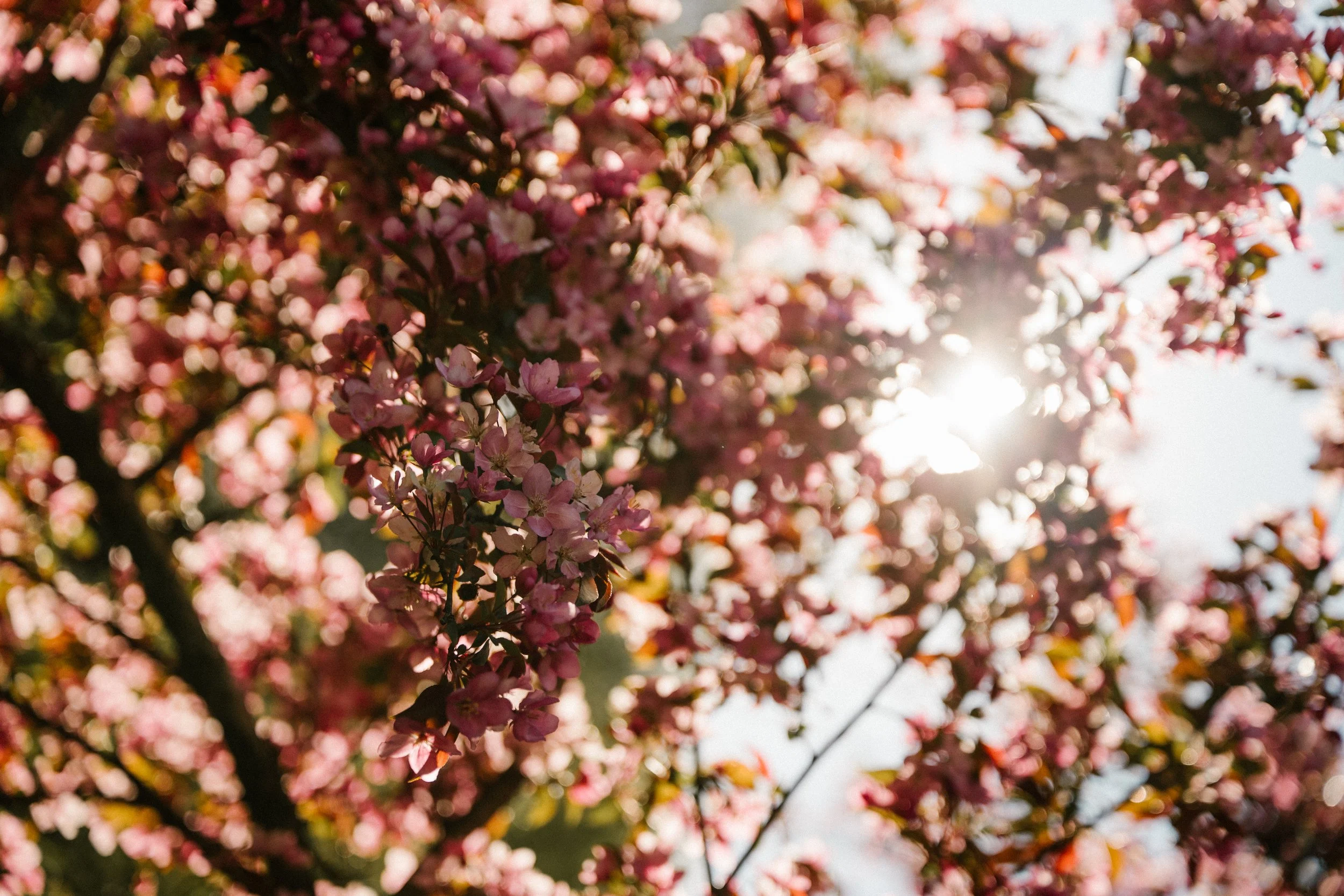
Photo by Jennifer Floyd.