
The Last Vestiges of Childhood
By Sonya Spillmann
@sonyaspillmann
I walk up from our basement, from where I’ve just folded yet another load of laundry. On the third stair from the main floor, a LEGO Batman lies helplessly on his back, arms reaching up in the air. Like a baby. Where did he come from? I wonder. Instinctively, I scoop him up, the pointed-eared black mask over a “handsome” LEGO face, wearing one of his alternate Batman outfits (a white tuxedo covered in red lip kisses). By the time I reach the living room a few steps later, a small smile crosses my face, alongside a feeling I can’t quite explain. It’s familiar, just on the edge of sad. Wistful, I think one could say.
Then, it shifts into something almost painful. It’s like being hugged too tight; all the air has left my lungs. It’s a feeling of emptiness, of heft, of shock—of finality—even though I know in the next moment, I’ll be able to take a big breath once again.
My youngest child had been playing with LEGOs in her bedroom about a week ago. But the bins under her older brother’s bed haven’t been touched in, I’m not exactly sure … months? What used to be a daily sound, that unmistakable rustling of hands through a pile of plastic blocks, rarely happens anymore.
Batman in hand, I can name the feeling. It’s like a hiccup, but instead of a diaphragm spasm, it’s my memories. Nostalgia. What was once routine: that sound, the picking up of blocks on the floor lest one’s foot be impaled, the hours of play, is now a rarity.
And at that moment, I wondered: Was that it? Is it over? Will I ever find a LEGO man on the stairs ever again?
***
It must have been college—freshman year, Honors English—the first time I learned the word etymology. Pre-internet, I was in class with twelve other freshmen, each of them seeming to have a better handle on college than I did. I took notes and read the books and our professor, a salty old man who had a limp and wore a leg brace, taught us the power of not only a word’s definition, but its origins.
The word itself, etymology, a wonder. Old French, from Old Latin, borrowed from Old Greek. Maybe even older: Gothic. Sanskrit. In essence, etymology is the study of the true sense of a word.
What is actual. What is real.
Where it comes from. What it’s been through.
***
Not having ridden a roller coaster in approximately twenty years, I knew it was a gamble on my end. But for the first time ever, because my youngest is now tall enough, I took my kids to a proper amusement park this past summer. It was the kind of park with rides that have height restrictions for one, but also (thank God) lock you in inordinately tight, then flip and turn you at speeds so fast your field of vision narrows into a descending tunnel.
Yes, I took motion sickness medicine forty-five minutes before we arrived. Yes, I balanced eating just enough food with not too much—tricky. And yes, I’m proud to report, I could hang.
We screamed. We laughed. And thanks to the threat of a thunderstorm that never came, we walked off one ride and back on to the next with almost no line. For one particular roller coaster, the staff didn’t even make us get out of our seats. We rode it five times back-to-back before I suggested a break, positive my brain or stomach would revolt should I press my luck any further.
We bought overpriced pretzels and overpriced drinks. We hid our backpack in corners instead of paying for overpriced lockers. We ate funnel cakes and probably didn’t drink enough water. I didn’t buy one of those ridiculous, though hilarious, overpriced pictures they take of you screaming on the first big drop.
We had so much fun together, but any memento of the day will simply be a few crooked selfies and the memories I’ll keep forever in my heart.
***
Nostalgia: originates from the German word for homesickness. That word comes from the Greek algos, meaning pain, grief, distress and nostos, a homecoming.
A homecoming of grief.
In 17th-century medical writings in Europe, this word was used to describe a condition that was so real, so heart-sickening, it could be fatal.
***
The side door of our home, which leads right into our kitchen, displays years' worth of my children’s artwork. The self-portraits that look nothing like them. The landscapes in thick tempera paint. The age-related handprint cutouts with their names written out on the front. But year after year, this gallery stock dwindles. And now that my youngest is in middle school, I’m wondering if I’ll get any new art to put on this door at all.
In truth, there is a part of me that wants to take all of it down. You know, clean up the space. Reduce the “visual clutter,” as one friend called it. But there’s this other part of me, the wistful LEGO-man-in-hand part, that isn’t ready yet. And I wonder if it ever will be.
All around my house, there’s been a metamorphosis. Board books and early readers replaced by novels. Candyland usurped by Chess. Family sing-along dance parties now separate and individual with headphones and AirPods. Catapillars into butterflies the argument can be made. But it’s not just that we’ve shifted from baby things to little kid things to older kid things. It’s that we’re actively moving out of older kid things into young adult territory. And there isn’t as much tangible evidence of their youth as there once was—unless we’re talking about the number of cars in the driveway and our grocery bill.
Yet even this will pass, and my memories will hiccup, and maybe this is why I’m still holding on.
***
Mother. From Latin. From Greek. Germanic. Slavic. Sanskrit.
The word “mother” has a history. And also? Linguists say ma- is the easiest, most natural, most developmentally on-track sound for babies to make.
Ma- ma- ma. Mama. Mom. Mother.
Can you imagine Cain and Abel, Mama, Mama-ing Eve?
***
I still buy chicken nuggets and Goldfish. I still drive two of them around to practices and friends’ houses. I still find socks everywhere. And our schedule is still color-coded and chaotic.
Yet. They also wash their own laundry. Fold their own sheets. Walk the dog around the block without me. They unload, and when prompted, re-load the dishwasher. (And yes, I do go back and rearrange it to be more efficient. Arrest me.) They make their own scrambled eggs. Clean their own toilet. So much of what used to fall explicitly on me, is now ours. It is now theirs.
At the beginning of the summer, my youngest son’s head was under my chin. Four months later? He now looks me in the eyes. For what has felt like a thousand years, I was a mom of little kids. I’ve known all along that they will, and are, growing up. But something about right now feels different. Lightning fast. A slingshot. Buckle in, babe, we’re twisting and turning and looping you upside down. Laugh. Scream. It’s your choice, but hold on.
***
Investigate: origins in the 1500s. Latin “to search after” + vestigare “to track, trace.”
Its root word, vestige: a mark, a trace, a sign.
In some medical writing, vestige is used to describe a scar.
***
Do I still have a pacifier tucked away in a drawer? Yes. Is it next to a baggie full of lost teeth? Also yes. Is there a crate filled with books I will not part with? Absolutely. Do I have a bin in the basement filled with lovies, a security blanket, little shoes, a baby dress, and an impossibly small sweater their grandmother knit? Yes, yes, yes, and yes.
Am I saving it for my grandchildren? The books, absolutely. But everything else? I’m not sure. I won’t fool myself into thinking that my children will want any of it. I think I’m simply holding onto it, at least for now, for myself.
I threw the LEGO Batman, a soon-to-be relic of these years, into the bin under my son’s bed. Maybe I’m holding onto these last traces of childhood not because I want time to stop or even to hold onto the past, but because I still can’t quite believe we’re here. That childhood is almost over. Butterflies preparing to migrate.
My freshman English professor was a war veteran. I don’t remember his name, but I remember the books he made us read, the stories of combat and heartache, of deep friendship and the dark side of the heart. I remember the poems he made us annotate, his face, and the grade he gave me on a paper on Moby Dick that I stayed up all night writing. I also remember his limp and his leg brace.
But when I think about this now, about how even if he walked without any physical evidence of what he’d been through—his life, his stories, his memories and experiences would always, always, be an indelible part of who he was.
His life is proof. Our lives are proof. We are born mothers, and then are mothers forever.
When my side door has no art on it anymore, when baskets filled with Magna-Tiles and LEGOs are gone, if the pantry no longer holds boxes of Cheez-Itz and fruit snacks, and my living room stays clean—if you would investigate my life, if you had to ‘‘follow the tracks’, trace back, look for signs, would you be able to see?
Will you know that motherhood has been the most defining role of my life?
Even after my kids are grown and on their own, will you see—that it still is?
From her first essay, Put it Down, to this final one ten years later, Sonya Spillmann has been overwhelmingly grateful to share her words on Coffee+Crumbs. If you want to keep up with Sonya, subscribe to her Substack and follow her on Instagram. She will also continue to offer writing workshops through her website, as well as one-on-one writing mentorships, coaching, and editorial services. (And she’s tinkering with the idea of self-publishing her memoir. Stay tuned!)
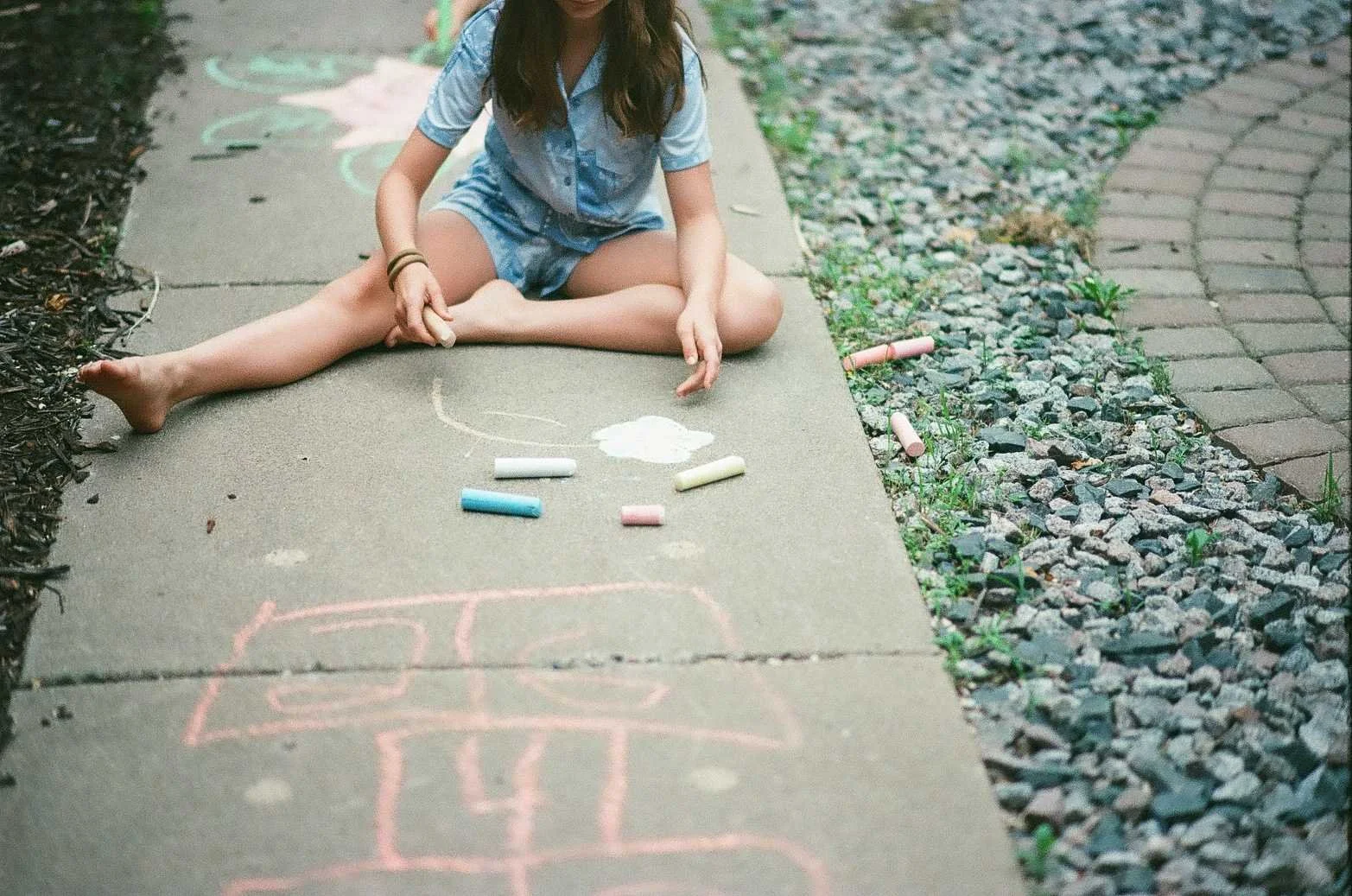
Photo by Jennifer Floyd.